Discover the timeless beauty of Tran Quoc Pagoda, Hanoi’s oldest Buddhist temple, with our exclusive concierge services. Our expert team is dedicated to creating a bespoke experience that unveils the rich spiritual heritage and architectural splendor of this iconic landmark. From arranging private guided tours with Buddhist scholars to organizing serene sunrise meditation sessions, our concierge services ensure an immersive and meaningful visit to this sacred site. We offer tailored itineraries that seamlessly blend exploration of the pagoda with visits to nearby cultural attractions, allowing you to fully appreciate the historical and spiritual context of this ancient temple. Let our concierge services transform your journey to Tran Quoc Pagoda into an unforgettable spiritual and cultural odyssey, complete with VIP access and insider knowledge that will deepen your understanding of Vietnam’s Buddhist traditions.
Nestled on a small island in the serene West Lake of Hanoi, Tran Quoc Pagoda stands as a testament to Vietnam’s rich spiritual heritage and architectural brilliance. As the oldest Buddhist temple in the bustling capital city, this iconic landmark has witnessed centuries of history unfold, making it a must-visit destination for both culture enthusiasts and spiritual seekers alike.
A Journey Through Time
Dating back to the 6th century, Tran Quoc Pagoda was originally constructed during the reign of Emperor Ly Nam De (544-548). Initially built on the banks of the Red River, the pagoda was later relocated to its current picturesque setting on the Golden Fish Island in West Lake in the 17th century. This relocation was a strategic move to protect the sacred structure from the river’s unpredictable flooding.
The pagoda’s name, which translates to “Stabilizing the Nation,” reflects its significant role in Vietnam’s spiritual and political landscape throughout history. Over the centuries, it has served as a sanctuary for meditation, prayer, and religious ceremonies, attracting devotees and curious visitors from around the globe.
Architectural Marvel and Spiritual Symbolism
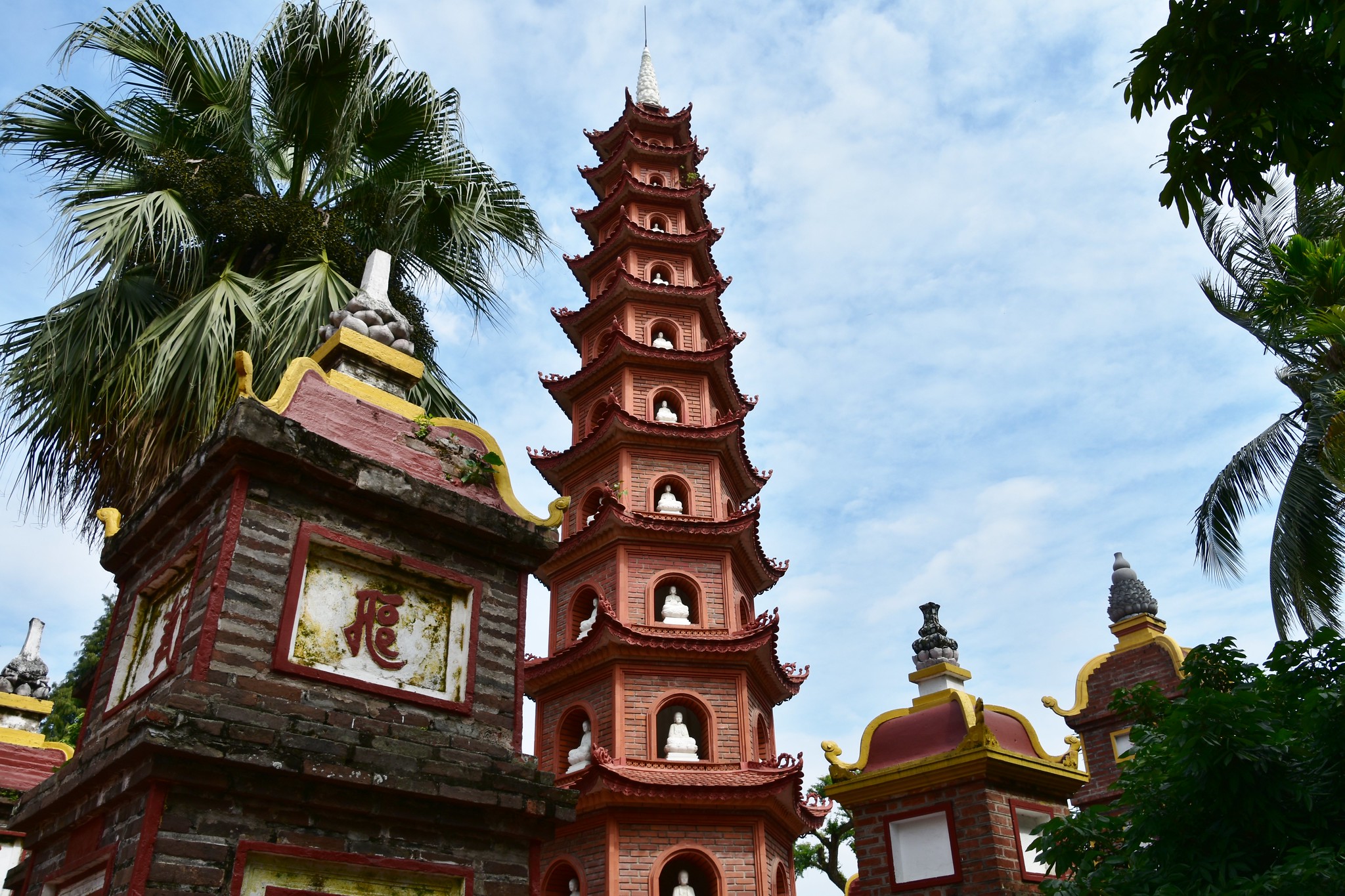
Tran Quoc Pagoda’s architecture is a harmonious blend of traditional Vietnamese design and Buddhist symbolism. The temple complex consists of several structures, each serving a unique purpose in Buddhist worship and meditation practices. The main pagoda, an eleven-story octagonal tower, stands at an impressive height of 15 meters, dominating the skyline and offering breathtaking views of West Lake.
As visitors approach the pagoda, they are greeted by an ornate three-door gate adorned with intricate carvings and vibrant red lacquer. This entrance serves as a symbolic threshold between the mundane world and the sacred space within. The courtyard beyond features meticulously manicured gardens, creating a tranquil atmosphere that invites contemplation and inner peace.
A magnificent gilded Buddha statue takes center stage inside the main hall, surrounded by elaborate altars and colorful offerings. The walls are adorned with intricate murals depicting scenes from Buddhist scriptures and Vietnamese folklore, providing a visual narrative of the religion’s teachings and cultural significance.
One of the pagoda’s most striking features is the Bodhi tree that graces its grounds. This sacred fig tree is said to be a cutting from the original Bodhi tree in Bodh Gaya, India, under which Buddha attained enlightenment. Its presence adds an extra layer of spiritual significance to the already hallowed site.
A Living Monument of Buddhism in Vietnam
Tran Quoc Pagoda is not merely a historical relic; it continues to be an active center of Buddhist worship and cultural preservation. The pagoda hosts numerous religious festivals and ceremonies throughout the year, offering visitors a chance to witness and participate in authentic Vietnamese Buddhist traditions.
One of the most significant events is the annual Vesak celebration, commemorating the birth, enlightenment, and death of Buddha. During this time, the pagoda comes alive with vibrant decorations, chanting monks, and devoted pilgrims, creating an atmosphere of joyous reverence that captivates all who attend.
The pagoda also houses a valuable collection of historical statues and artifacts, including the revered statue of Shakyamuni Buddha entering Nirvana and numerous ancient stelae that document the pagoda’s long and storied history. These treasures provide invaluable insights into Vietnam’s Buddhist heritage and artistic traditions.
Visitor Experience and Practical Information
Tran Quoc Pagoda welcomes visitors daily from early morning until late afternoon. While there is no entrance fee, donations are appreciated to help maintain this important cultural site. Visitors are advised to dress modestly out of respect for the sacred nature of the place.
The best time to visit is early morning or late afternoon, when the soft light casts a golden glow over the pagoda, creating a magical atmosphere perfect for photography and quiet contemplation. Sunset at Tran Quoc Pagoda is particularly enchanting as the sun dips below the horizon, painting the sky in vibrant hues and reflecting off the tranquil waters of West Lake.
For those seeking a deeper understanding of the pagoda’s history and significance, guided tours are available. These knowledgeable guides can provide fascinating insights into the temple’s architecture, religious practices, and cultural importance, enhancing the overall visitor experience.
Tran Quoc Pagoda in the Context of Hanoi’s Cultural Landscape
As Hanoi continues to evolve into a modern metropolis, Tran Quoc Pagoda serves as an important anchor to the city’s spiritual and cultural roots. Its presence offers a peaceful retreat from the bustling streets, allowing both locals and tourists to connect with Vietnam’s rich Buddhist heritage.
The pagoda’s location on West Lake also makes it an ideal starting point for exploring other nearby attractions, such as the Tay Ho Temple and the vibrant Quang An flower market. Its proximity to these sites creates a cultural circuit that showcases the diverse facets of Hanoi’s historical and contemporary identity.
In conclusion, Tran Quoc Pagoda stands as a living testament to Vietnam’s enduring spiritual traditions and architectural prowess. Its serene beauty, rich history, and ongoing religious significance make it an essential stop for anyone seeking to understand the heart and soul of Hanoi. Whether you’re a history buff, a spiritual seeker, or simply a curious traveler, a visit to Tran Quoc Pagoda promises an unforgettable journey through time and an opportunity to experience the timeless allure of Vietnam’s oldest Buddhist temple in the capital city.